
Occupy Wall Street also received a statement today from Cairo, making it clear that Egypt is with us. This is so beautiful, new york is calling me I'd give anything to be there right now holy fuck with the freedom
Wednesday, October 26, 2011
Hero of the Egyptian Revolution makes surprise visit to Occupy Wall Street
Everybody watch this, it had me nearly in tears
Occupy Wall Street also received a statement today from Cairo, making it clear that Egypt is with us. This is so beautiful, new york is calling me I'd give anything to be there right now holy fuck with the freedom
Occupy Wall Street also received a statement today from Cairo, making it clear that Egypt is with us. This is so beautiful, new york is calling me I'd give anything to be there right now holy fuck with the freedom

Monday, October 24, 2011
"Why Socialism?" by Albert Einstein

Originally published in the Monthly Review in May of 1949
Is it advisable for one who is not an expert on economic and social issues to express views on the subject of socialism? I believe for a number of reasons that it is.
Let us first consider the question from the point of view of scientific knowledge. It might appear that there are no essential methodological differences between astronomy and economics: scientists in both fields attempt to discover laws of general acceptability for a circumscribed group of phenomena in order to make the interconnection of these phenomena as clearly understandable as possible. But in reality such methodological differences do exist. The discovery of general laws in the field of economics is made difficult by the circumstance that observed economic phenomena are often affected by many factors which are very hard to evaluate separately. In addition, the experience which has accumulated since the beginning of the so-called civilized period of human history has—as is well known—been largely influenced and limited by causes which are by no means exclusively economic in nature. For example, most of the major states of history owed their existence to conquest. The conquering peoples established themselves, legally and economically, as the privileged class of the conquered country. They seized for themselves a monopoly of the land ownership and appointed a priesthood from among their own ranks. The priests, in control of education, made the class division of society into a permanent institution and created a system of values by which the people were thenceforth, to a large extent unconsciously, guided in their social behavior.
But historic tradition is, so to speak, of yesterday; nowhere have we really overcome what Thorstein Veblen called “the predatory phase” of human development. The observable economic facts belong to that phase and even such laws as we can derive from them are not applicable to other phases. Since the real purpose of socialism is precisely to overcome and advance beyond the predatory phase of human development, economic science in its present state can throw little light on the socialist society of the future.
Second, socialism is directed towards a social-ethical end. Science, however, cannot create ends and, even less, instill them in human beings; science, at most, can supply the means by which to attain certain ends. But the ends themselves are conceived by personalities with lofty ethical ideals and—if these ends are not stillborn, but vital and vigorous—are adopted and carried forward by those many human beings who, half unconsciously, determine the slow evolution of society.
For these reasons, we should be on our guard not to overestimate science and scientific methods when it is a question of human problems; and we should not assume that experts are the only ones who have a right to express themselves on questions affecting the organization of society.
Innumerable voices have been asserting for some time now that human society is passing through a crisis, that its stability has been gravely shattered. It is characteristic of such a situation that individuals feel indifferent or even hostile toward the group, small or large, to which they belong. In order to illustrate my meaning, let me record here a personal experience. I recently discussed with an intelligent and well-disposed man the threat of another war, which in my opinion would seriously endanger the existence of mankind, and I remarked that only a supra-national organization would offer protection from that danger. Thereupon my visitor, very calmly and coolly, said to me: “Why are you so deeply opposed to the disappearance of the human race?”
I am sure that as little as a century ago no one would have so lightly made a statement of this kind. It is the statement of a man who has striven in vain to attain an equilibrium within himself and has more or less lost hope of succeeding. It is the expression of a painful solitude and isolation from which so many people are suffering in these days. What is the cause? Is there a way out?
It is easy to raise such questions, but difficult to answer them with any degree of assurance. I must try, however, as best I can, although I am very conscious of the fact that our feelings and strivings are often contradictory and obscure and that they cannot be expressed in easy and simple formulas.
Man is, at one and the same time, a solitary being and a social being. As a solitary being, he attempts to protect his own existence and that of those who are closest to him, to satisfy his personal desires, and to develop his innate abilities. As a social being, he seeks to gain the recognition and affection of his fellow human beings, to share in their pleasures, to comfort them in their sorrows, and to improve their conditions of life. Only the existence of these varied, frequently conflicting, strivings accounts for the special character of a man, and their specific combination determines the extent to which an individual can achieve an inner equilibrium and can contribute to the well-being of society. It is quite possible that the relative strength of these two drives is, in the main, fixed by inheritance. But the personality that finally emerges is largely formed by the environment in which a man happens to find himself during his development, by the structure of the society in which he grows up, by the tradition of that society, and by its appraisal of particular types of behavior. The abstract concept “society” means to the individual human being the sum total of his direct and indirect relations to his contemporaries and to all the people of earlier generations. The individual is able to think, feel, strive, and work by himself; but he depends so much upon society—in his physical, intellectual, and emotional existence—that it is impossible to think of him, or to understand him, outside the framework of society. It is “society” which provides man with food, clothing, a home, the tools of work, language, the forms of thought, and most of the content of thought; his life is made possible through the labor and the accomplishments of the many millions past and present who are all hidden behind the small word “society.”
It is evident, therefore, that the dependence of the individual upon society is a fact of nature which cannot be abolished—just as in the case of ants and bees. However, while the whole life process of ants and bees is fixed down to the smallest detail by rigid, hereditary instincts, the social pattern and interrelationships of human beings are very variable and susceptible to change. Memory, the capacity to make new combinations, the gift of oral communication have made possible developments among human being which are not dictated by biological necessities. Such developments manifest themselves in traditions, institutions, and organizations; in literature; in scientific and engineering accomplishments; in works of art. This explains how it happens that, in a certain sense, man can influence his life through his own conduct, and that in this process conscious thinking and wanting can play a part.
Man acquires at birth, through heredity, a biological constitution which we must consider fixed and unalterable, including the natural urges which are characteristic of the human species. In addition, during his lifetime, he acquires a cultural constitution which he adopts from society through communication and through many other types of influences. It is this cultural constitution which, with the passage of time, is subject to change and which determines to a very large extent the relationship between the individual and society. Modern anthropology has taught us, through comparative investigation of so-called primitive cultures, that the social behavior of human beings may differ greatly, depending upon prevailing cultural patterns and the types of organization which predominate in society. It is on this that those who are striving to improve the lot of man may ground their hopes: human beings are not condemned, because of their biological constitution, to annihilate each other or to be at the mercy of a cruel, self-inflicted fate.
If we ask ourselves how the structure of society and the cultural attitude of man should be changed in order to make human life as satisfying as possible, we should constantly be conscious of the fact that there are certain conditions which we are unable to modify. As mentioned before, the biological nature of man is, for all practical purposes, not subject to change. Furthermore, technological and demographic developments of the last few centuries have created conditions which are here to stay. In relatively densely settled populations with the goods which are indispensable to their continued existence, an extreme division of labor and a highly-centralized productive apparatus are absolutely necessary. The time—which, looking back, seems so idyllic—is gone forever when individuals or relatively small groups could be completely self-sufficient. It is only a slight exaggeration to say that mankind constitutes even now a planetary community of production and consumption.
I have now reached the point where I may indicate briefly what to me constitutes the essence of the crisis of our time. It concerns the relationship of the individual to society. The individual has become more conscious than ever of his dependence upon society. But he does not experience this dependence as a positive asset, as an organic tie, as a protective force, but rather as a threat to his natural rights, or even to his economic existence. Moreover, his position in society is such that the egotistical drives of his make-up are constantly being accentuated, while his social drives, which are by nature weaker, progressively deteriorate. All human beings, whatever their position in society, are suffering from this process of deterioration. Unknowingly prisoners of their own egotism, they feel insecure, lonely, and deprived of the naive, simple, and unsophisticated enjoyment of life. Man can find meaning in life, short and perilous as it is, only through devoting himself to society.
The economic anarchy of capitalist society as it exists today is, in my opinion, the real source of the evil. We see before us a huge community of producers the members of which are unceasingly striving to deprive each other of the fruits of their collective labor—not by force, but on the whole in faithful compliance with legally established rules. In this respect, it is important to realize that the means of production—that is to say, the entire productive capacity that is needed for producing consumer goods as well as additional capital goods—may legally be, and for the most part are, the private property of individuals.
For the sake of simplicity, in the discussion that follows I shall call “workers” all those who do not share in the ownership of the means of production—although this does not quite correspond to the customary use of the term. The owner of the means of production is in a position to purchase the labor power of the worker. By using the means of production, the worker produces new goods which become the property of the capitalist. The essential point about this process is the relation between what the worker produces and what he is paid, both measured in terms of real value. Insofar as the labor contract is “free,” what the worker receives is determined not by the real value of the goods he produces, but by his minimum needs and by the capitalists’ requirements for labor power in relation to the number of workers competing for jobs. It is important to understand that even in theory the payment of the worker is not determined by the value of his product.
Private capital tends to become concentrated in few hands, partly because of competition among the capitalists, and partly because technological development and the increasing division of labor encourage the formation of larger units of production at the expense of smaller ones. The result of these developments is an oligarchy of private capital the enormous power of which cannot be effectively checked even by a democratically organized political society. This is true since the members of legislative bodies are selected by political parties, largely financed or otherwise influenced by private capitalists who, for all practical purposes, separate the electorate from the legislature. The consequence is that the representatives of the people do not in fact sufficiently protect the interests of the underprivileged sections of the population. Moreover, under existing conditions, private capitalists inevitably control, directly or indirectly, the main sources of information (press, radio, education). It is thus extremely difficult, and indeed in most cases quite impossible, for the individual citizen to come to objective conclusions and to make intelligent use of his political rights.
The situation prevailing in an economy based on the private ownership of capital is thus characterized by two main principles: first, means of production (capital) are privately owned and the owners dispose of them as they see fit; second, the labor contract is free. Of course, there is no such thing as a pure capitalist society in this sense. In particular, it should be noted that the workers, through long and bitter political struggles, have succeeded in securing a somewhat improved form of the “free labor contract” for certain categories of workers. But taken as a whole, the present day economy does not differ much from “pure” capitalism.
Production is carried on for profit, not for use. There is no provision that all those able and willing to work will always be in a position to find employment; an “army of unemployed” almost always exists. The worker is constantly in fear of losing his job. Since unemployed and poorly paid workers do not provide a profitable market, the production of consumers’ goods is restricted, and great hardship is the consequence. Technological progress frequently results in more unemployment rather than in an easing of the burden of work for all. The profit motive, in conjunction with competition among capitalists, is responsible for an instability in the accumulation and utilization of capital which leads to increasingly severe depressions. Unlimited competition leads to a huge waste of labor, and to that crippling of the social consciousness of individuals which I mentioned before.
This crippling of individuals I consider the worst evil of capitalism. Our whole educational system suffers from this evil. An exaggerated competitive attitude is inculcated into the student, who is trained to worship acquisitive success as a preparation for his future career.
I am convinced there is only one way to eliminate these grave evils, namely through the establishment of a socialist economy, accompanied by an educational system which would be oriented toward social goals. In such an economy, the means of production are owned by society itself and are utilized in a planned fashion. A planned economy, which adjusts production to the needs of the community, would distribute the work to be done among all those able to work and would guarantee a livelihood to every man, woman, and child. The education of the individual, in addition to promoting his own innate abilities, would attempt to develop in him a sense of responsibility for his fellow men in place of the glorification of power and success in our present society.
Nevertheless, it is necessary to remember that a planned economy is not yet socialism. A planned economy as such may be accompanied by the complete enslavement of the individual. The achievement of socialism requires the solution of some extremely difficult socio-political problems: how is it possible, in view of the far-reaching centralization of political and economic power, to prevent bureaucracy from becoming all-powerful and overweening? How can the rights of the individual be protected and therewith a democratic counterweight to the power of bureaucracy be assured?
Clarity about the aims and problems of socialism is of greatest significance in our age of transition. Since, under present circumstances, free and unhindered discussion of these problems has come under a powerful taboo, I consider the foundation of this magazine to be an important public service.

Sunday, October 23, 2011
Friday, October 21, 2011
A Brief History of Imperialist Interests in Haiti

Last year's earthquake in Haiti brought that little nation to the world's attention. After the initial reactions of horror and sympathy brought on by the pictures of that disaster, I'm sure a lot of people began wondering about the country's poverty. Just why was that country so poor? There's no real police force in their capital Port-au-Prince, and it is considered one of the most dangerous places on earth. How did this happen? Why are they in this situation to begin with?
It's a little-known and complex history, but everyone needs to understand it. Haiti's history is a shining example of the horrifying and unjust evils of imperialism. But Haiti's courageous mothers and fathers have also set an example for the rest of us, begging to be admired by freedom fighters all around the world.

Haiti occupies the western one-third of the island of Hispaniola, to the east of Cuba. Within fifty years of the Spanish arrival at Hispaniola, not a single Taino or Ciboney Indian was alive. Their civilizations were wiped off the earth. You may want to check out the writings of Bartolomé de las Casas for a first hand account of how this took place. Las Casas was ahead of his time. He was horrified by the atrocities he witnessed, and fought hard for aboriginal rights. But most people in his age considered him a fanatic. There are drawbacks to browsing through his writings. Your hands may ball into fists and shake with rage against your will, and you'll probably lose sleep. But you won't regret it.

Sugar would make the fortunes of the Caribbean. But farming and refining of sugarcane in the Caribbean's heat was torturous, backbreaking work, and no free man would do it. Slaves started arriving from Africa in 1502, only ten years after Columbus's arrival. The lucky ones who survived the boats were forced to work 12 hours a day, 6 days a week. On the seventh day, they were forced to grow their own food, or else starve to death. These slaves would die out just as quickly as the Taino and Coboney, but the supply from Africa seemed inexhaustible, so it mattered little to the Europeans. In Saint-Domingue alone (modern Haiti), slavery is estimated to have killed 1 million people.
In 1776, a revolution broke out in America. France eventually allied with the rebels, and Saint-Domingue, being French territory, sent over a regiment of black slaves and freedmen to fight with the Americans. They saw action at Saratoga and Savannah. When they returned, they brought back with them the idea that people don't have to put up with being dominated.
On the night of August 22, 1791, drumming was heard all over the north of Saint-Domingue. It heralded the Haitian Revolution. A Vodou priest declared that all whites must die. "We must not leave any refuge, or any hope of salvation." Over a thousand plantations were burned, and tens of thousands of people were massacred.

The United States sent arms to the black army. This move was not idealistic. Like the French, the Americans did not think of black Haitians as human beings like themselves. America simply wanted the French out of the Caribbean. President John Adams noted of the Haitians in 1799, "Independence is the worst and most dangerous condition they can be in for the United States."
A hero emerged for the Haitians, and he brought order, stability, and respect to the new army - Toussaint L'Ouverture. Born into slavery, Toussaint learned to read, and was inspired by Julius Caesar's commentaries for his political and military education. He gained control of the entire country by 1800, and declared independence. He banned slavery, annexed the Spanish side of the island to the east, Santo Domingo, and at least for a brief time, Hispaniola was united again. The Haitian Revolution remains the only successful slave revolution in the history of the world.

From the very beginning, Europe and America refused to consider Haiti a legitimate government. In February 1802, Napoleon Bonaparte sent his brother-in-law, General Charles Leclerc, to retake Haiti. Leclerc promised the Haitians that French rule in the future would be free and equal. Many of Toussaint's best generals betrayed him, and defected to the French. Toussaint was captured a few months later, his family kidnapped along with him. They were shipped to France. Toussaint defiantly told his captors,
"In overthrowing me you have cut down in Saint Domingue only the trunk of the tree of liberty; it will spring up again from the roots, for they are many and they are deep."
He was imprisoned high in the Alps. Toussaint was found dead the following spring, cold body huddled sadly next to the fireplace in his cell. His colossal monuments remain unbuilt.

France's inevitable betrayal came in July. Slavery was reimposed throughout the French empire, and Haitian blacks were thrown back into shackles. At once, black soldiers who had fought for the French rose up again. Leclerc told Napoleon that he "shall have to wage a war of extermination" if slavery was made into law again. Luckily, a yellow fever epidemic wiped out most of the French army, including Leclerc himself, and the Haitians soundly defeated what remained. They renamed the country Haiti, after it's Taino name, Ayiti, land of the mountains. General Jean-Jacques Dessalines (who remained loyal to Toussaint, and continued with the revolution) said "I have given the French cannibals blood for blood. I have avenged America."
The United States Congress banned trade with Haiti in 1806. President Thomas Jefferson felt that non-Europeans were not yet "capable" of enjoying liberty. In 1821, Secretary of State John Quincy Adams said that the United States "goes not abroad, in search of monsters to destroy. She is the well-wisher to the freedom and independence to all. She is the champion and vindicator only of her own." Two years later, he formally notified Spain of America's interest in acquiring Cuba.
In 1825, the French sent warships to encircle Haiti's coastlines. That land - and slaves - was stolen French property. Now she demanded reparations: 150 million francs, in gold.
This violated the Monroe Doctrine. Issued in 1823, the Monroe Doctrine stated that any attempts at colonization or interference in the Americas by European powers, would be considered an act of aggression against the United States. Americans would've cared that this violated the Monroe Doctrine, had Haiti been ruled by white people. The U.S. did nothing.
150 million francs was ten times Haiti's annual revenue. But with French guns aimed at Port-au-Prince, they didn't have much of a choice. Haiti needed to take on loans to cover the first payment--30 million francs. Interest for 20% of this loan was demanded in advance. The entire Haitian treasury had to be emptied simply for that. Haiti finally completed paying off these "reparations" in 1947. 1947. In 1947, France, post-World War II, still considered human enslavement legitimate.
For most of Haiti's history, it would see outside influences mucking up its sovereignty, and inserting their illegitimate leaders, under the threat of military occupation. In 1915, the U.S.-backed dictator Vilbrun Guillaume Sam saw a revolution on his hands. He ordered his soldiers to massacre 167 political prisoners the moment the first rebel bullet was fired. And thus, 167 people were murdered when that bullet was fired. One soldier gouged out a child's eyes, and pried out his teeth one by one, before finally murdering him.
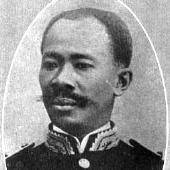
Sam meanwhile fled to the French embassy, where he had been so nobly granted asylum. A mob, enraged at the massacre that had just taken place, stormed the embassy, pulled him off the toilet on which he was trembling in fear, and beat him to death in the streets. Sic semper tyrannis, you son of a fuck.
News of these events soon reached the American ships anchored in the harbor of the capital. Haiti descended into anarchy, and when Woodrow Wilson ordered the invasion, the protection the American troops offered was actually fairly welcomed. But there was a problem. The U.S. didn't like the man the Haitians wanted to be president, Rosalvo Bobo. So the U.S. picked Haiti's president for them, and forced them sign a constitution they didn't want. American troops would remain in Haiti for the next nineteen years, crushing democratic movements, installing puppet governments, and running their economy. During their occupation, the United States decided to just take land from the Dominican Republic on the eastern side of the island. As soon as the U.S. left in 1934, the Dominican dictator sent over troops and massacred 20,000 Haitians who lived on the disputed land.

Don't think for a second that Haiti is an isolated case. The U.S. has a long and distinguished history of overthrowing Latin American governments for its own interests. Just yesterday, President Alvaro Colom of Guatemala apologized to his nation for a "great crime." That crime was the CIA's overthrow of Guatemala's democratic government in 1957. It was on behalf of the American monopoly, United Fruit Company. It was for bananas.
And don't think these tactics have stopped. In 2004, the U.S. once again ousted Haiti's democratically elected president. That's right. Only seven years ago. Since it's so recent, the details of course remain sketchy, but considering the fact that President Jean-Bertrand Aristide was forcibly removed from power on an American plane, guarded by American troops, it's not all that crazy to make presumptions.
Starting his life as a priest, Aristide founded an orphanage in Haiti in the 80s, and encouraged the children he served to participate in politics and democracy. This earned Aristide a lot of enemies. He's survived at least four assassination attempts, one of which was the St. Jean Bosco Massacre. On September 11, 1988, as the army and police stood by and watched, over a hundred armed men wearing red armbands entered Aristide's church during mass, and fired machine guns into the congregation. Those who tried to escape were butchered with machetes. The exact death toll is unknown, but estimates put it at 50 at the most, with even more injured.

Catholics in Rome ordered Aristide to leave Haiti, expelled him from the Salesian Order, and called his political activities an "incitement to hatred and violence." Tens of thousands of protesters blocked Aristide's access to the airport. On his expulsion, Aristide said, "The crime of which I stand accused is the crime of preaching food for all men and women."
In 1990, he won the presidency with 67% of the vote. Aristide got to work initiating substantial reforms, infuriating Haiti's business and military elite. He attempted to bring the military under civilian control, initiated investigations into humans rights violations, and banned the emigration of elite Haitians until their bank accounts could be examined.
The military overthrew him in September 1991. The Haitian National Intelligence Service (SIN) played a prominent role in this coup. The CIA set up and financed SIN in the 1980s. Emmanuel Constant, who had been on the CIA's payroll, established death squads to murder and terrorize Aristide supporters. It's important to remember that this evidence of CIA involvement is circumstantial, there's nothing concrete, and Haiti's elite wanted Aristide out from the beginning. It very well could've been internal. Aristide himself travelled around the world in his exile, building international support. The UN established a trade embargo against Haiti. George H.W. Bush and Bill Clinton considered the U.S. exempt from this embargo.
In 1994, with building pressure from the UN and the U.S., the regime in Haiti backed down. With U.S. troops accompanying him, Aristide stepped back onto Haitian soil, and he was once again welcomed into office. He disbanded the army of Haiti, and established a civilian police force. This wasn't unconditional. He was forced to reverse many of his reforms thanks to U.S. pressure. Noam Chomsky says:
"When Clinton restored Aristide - Clinton of course supported the military junta, another little hidden story... he strongly supported it in fact. He even allowed the Texaco Oil Company to send oil to the junta in violation of presidential directives; Bush Sr. did so as well - well, he finally allowed the president to return, but on condition that he accept the programs of Marc Bazin, the US candidate that he had defeated in the 1990 election. And that meant a harsh neoliberal program, no import barriers. That means that Haiti has to import rice and other agricultural commodities from the US from US agribusiness, which is getting a huge part of its profits from state subsidies. So you get highly subsidized US agribusiness pouring commodities into Haiti; I mean, Haitian rice farmers are efficient but nobody can compete with that, so that accelerated the flight into the cities."
In December 2003, Aristide boldly demanded $21 billion dollars from France in reparations - the modern day sum of those 150 million francs, which launched Haiti into its current state of poverty and violence. Aristide's courageous actions to give power back to the Haitian people violated the first rule of leading nations within America's sphere of influence - shut the fuck up and do what you're told.
Two months later, in February 2004, the brutal murder of a gang leader sparked a rebellion. The brother of the assassinated gang leader blamed Aristide, took over the gang, and renamed it from the "Cannibal Army," to the "National Revolutionary Front for the Liberation of Haiti." Immediately, Aristide's lawyers claimed that the U.S. began to supply them with weapons. On February 28, Aristide was kidnapped and flown out of the country.
Three days later, US Congresswoman Maxine Waters, and Aristide family friend Randall Robinson, both reported that Aristide had called them from the plane, and told them that he had been abducted, and was being held hostage by an armed military guard. He said that someone from the U.S. Embassy came to his house and told him that he would be killed "and a lot of Haitians would be killed" if he did not leave with them immediately. He was taken to Jamaica, and then to South Africa. Wikileaks cables have since revealed that the U.S. pressured South Africa to take and hold Aristide, or else face the loss of a UN Security Council seat. When asked for an explanation, Colin Powell practically admitted it: "it might have been better for members of Congress who have heard these stories to ask us about the stories before going public with them so we don't make a difficult situation that much more difficult."
Aristide remained in exile until earlier this year. He stepped foot on Haitian soil again on March 17. Barack Obama asked the South African president to delay his departure until after the Haitian elections, fearing it would be "destabilizing." You know what else is destabilizing? Military coups.
Aristide's party was not allowed to run in the election. Stepping off the airplane, he told the thousands of supporters waiting for him, "The exclusion of Fanmi Lavalas is the exclusion of the Haitian people. In 1804, the Haitian revolution marked the end of slavery. Today, may the Haitian people end exiles and coup d’états, while peacefully moving from social exclusion to inclusion."
Amy Goodman of Democracy Now was with Aristide on the plane when it landed. Here's that tearjerking episode in its entirety. Aristide himself is interviewed near the end.
It's a little surprising that the U.S. government suddenly started pretending to care about the Haitian people when the earthquake struck in 2010. Professional fatass and racist Rush Limbaugh said that Obama was going to use the crisis to "boost his credibility with the black community." He blamed Haiti's poverty on "communism," and said "We've already donated to haiti, it's called US income tax." HERP DERP.
Televangelist joke Pat Robertson said the earthquake struck Haiti because they are "cursed" and they signed a "pact to the devil." Here are Keith Olbermann's brief, but brilliant comments concerning these sorry excuses for human beings.
But more importantly, here are comments from the Haitians themselves. It starts out with Robertson's comments, and a Haitian gives his reaction at 1:05.
So. This is why Haiti is Haiti. It's because of us. We did this to them. So, as the rest of America continues to wave their flags in blissful ignorance of the atrocities their government continues to commit in their names, there's a quiet phrase uttered in Godspeed's song, The Dead Flag Blues, which observant men and women have the mental capacity to reflect on:
Tuesday, October 18, 2011
Monday, October 17, 2011
Marine vet who stood up to cops at Times Square interviewed on Countdown
If you haven't seen this yet, you should watch it.
Olbermann interviewed him tonight,here are parts of it:EDIT: The whole thing's up on youtube:
Also, when I went to Current's website to get that video, I saw this

YEEEEEESSSSSSSSSSSSSSSSSSSSSSSSSS.
We're finally getting a television station with a liberal voice. MSNBC's okay, but they're too dependent on the two-party system, and they never criticize the Democrats for being a moderate conservative party. Current now has two of the three liberal media figures I truly love. Come on over, Rachel. You know you want to.
Olbermann interviewed him tonight,
Also, when I went to Current's website to get that video, I saw this

YEEEEEESSSSSSSSSSSSSSSSSSSSSSSSSS.
We're finally getting a television station with a liberal voice. MSNBC's okay, but they're too dependent on the two-party system, and they never criticize the Democrats for being a moderate conservative party. Current now has two of the three liberal media figures I truly love. Come on over, Rachel. You know you want to.
Sunday, October 16, 2011
Meet the Guy Who Snitched on Occupy Wall Street to the FBI and NYPD
A fat middle aged white conservative has infiltrated Occupy Wall Street!

Thomas Ryan is a self-described "security expert." He's a conservative. He's an American. He showed up to Occupy Wall Street meetings, got on their mailing list, and forwarded their emails to the NYPD, NBC, his buddy at the FBI, and yellow journalist Andrew Breitbart. Of course, nobody asked for them except for Breitbart, he just sort of did it. You're exposed, Occupy Wall Street. More like OCCUPY COMMUNISM.
Ryan is such an expert with security, that he accidentally exposed himself as the “snitch” when he forgot to delete his own forwarded emails, upon releasing everything. Hey Thomas Ryan, great job infiltrating an organization that welcomes everybody and has nothing to hide. Kudos.
Of course, nobody gives a shit about this because there’s nothing incriminating. OR IS THERE? One email:
Andrew Breitbart sees this for what it really is — Communism. Occupy Wall Street is actually trying to “destabilize global markets.” It doesn’t matter that the words “global markets” are not included in this email. Andrew Breitbart can read between the lines. But that’s not all. Thomas Ryan himself goes on to say that Occupy Wall Street is in league with Al-Qaeda. It's funny because conservatives say these protesters are the ones who have nothing better to do, and live in their parents' basements.
Ryan:

Thomas Ryan is a self-described "security expert." He's a conservative. He's an American. He showed up to Occupy Wall Street meetings, got on their mailing list, and forwarded their emails to the NYPD, NBC, his buddy at the FBI, and yellow journalist Andrew Breitbart. Of course, nobody asked for them except for Breitbart, he just sort of did it. You're exposed, Occupy Wall Street. More like OCCUPY COMMUNISM.
Ryan is such an expert with security, that he accidentally exposed himself as the “snitch” when he forgot to delete his own forwarded emails, upon releasing everything. Hey Thomas Ryan, great job infiltrating an organization that welcomes everybody and has nothing to hide. Kudos.
Of course, nobody gives a shit about this because there’s nothing incriminating. OR IS THERE? One email:
"We’re in this for the long haul. There are no “solutions” that can be presented quickly to make us go away. And so there will be moments where our presence is no longer an uncomfortable and unknown variable, but rather is normalized and integrated. It’s in those moments that we have to push the envelop [sic], pry open the space of possibility even farther. We go as far as we can to destabalize [sic], but maintain momentum. And when that’s the new “normal” then we go farther. That’s how change happens, how we shift the terrain and the terms of the game."
Andrew Breitbart sees this for what it really is — Communism. Occupy Wall Street is actually trying to “destabilize global markets.” It doesn’t matter that the words “global markets” are not included in this email. Andrew Breitbart can read between the lines. But that’s not all. Thomas Ryan himself goes on to say that Occupy Wall Street is in league with Al-Qaeda. It's funny because conservatives say these protesters are the ones who have nothing better to do, and live in their parents' basements.
Ryan:
My respect for FDNY & NYPD stems from them risking their lives to save mine when my house was on fire in sunset park when I was 8 yrs old. Also, for them risking their lives and saving many family and friends during 9/11.
Don’t you find it Ironic that out of all the NYPD involved with the protest, [protesters] have only targeted the ones with Black Ribbons, given to them for their bravery during 9/11?
I am sorry if we see things differently, I try to look at everything as a whole and in patterns. Everything we do in life and happens in life, there is a pattern behind it.

Subscribe to:
Posts (Atom)
